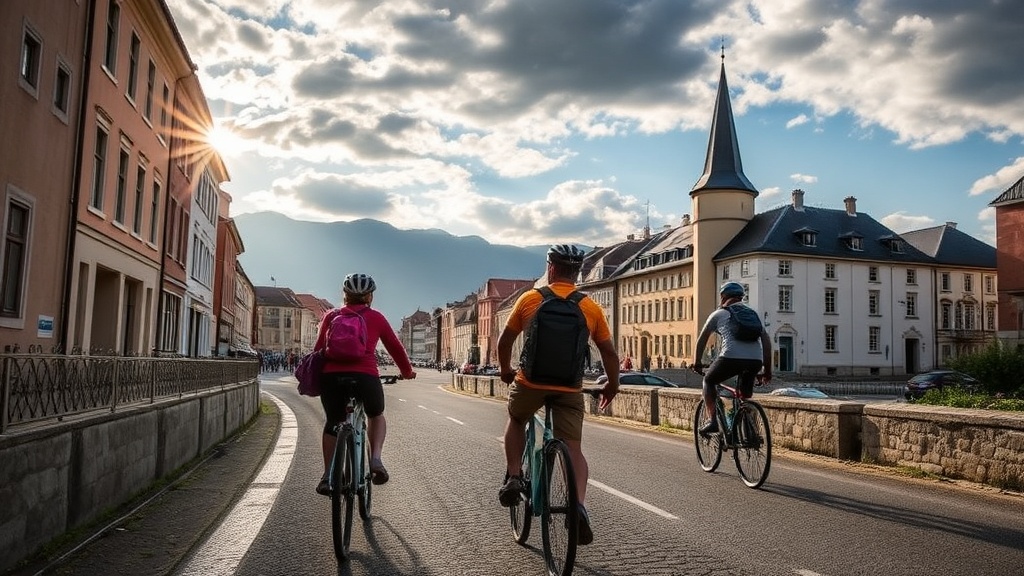
The Ultimate Guide to Planning Your First European Cycling Vacation
Where should you go for your first European cycling vacation?
The Netherlands, Denmark, and the Loire Valley in France offer the most forgiving terrain for beginners—flat paths, excellent infrastructure, and plenty of stopping points. These regions provide gentle introductions without the punishing climbs of the Alps or Pyrenees.
The Netherlands deserves its reputation as cycling paradise. Dedicated bike lanes crisscross the entire country. You'll find numbered junction routes (knooppunten) that make navigation almost foolproof. The Amsterdam to Bruges route—roughly 350 kilometers—takes you through tulip fields, historic windmills, and charming canal towns. It's mostly flat. You can cover 60-80 kilometers daily without exhaustion.
Denmark offers something similar. The country has invested heavily in cycling infrastructure over decades. The Copenhagen to Berlin route spans 650 kilometers through Danish islands and northern Germany. You'll pedal past Viking ruins, white sand beaches, and colorful fishing villages.
France's Loire Valley—known as "the Garden of France"—combines flat riverside cycling with châteaux and vineyards. The official Loire à Vélo route covers 800 kilometers, though most beginners choose sections between Orléans and Angers. Wine tastings break up the riding. (Yes, this is encouraged.)
That said, don't dismiss hillier destinations entirely. Tuscany's Chianti region and Austria's Danube Valley offer moderate climbs with huge rewards—medieval hill towns, thermal baths, and some of Europe's best food. Just build in rest days.
What gear do you actually need?
Quality padded cycling shorts matter more than an expensive bike. Chafing ruins trips. Blisters end them.
Most European cycling tourists rent bikes locally rather than shipping their own. Tour companies typically provide Trek Domane or similar endurance road bikes with relaxed geometry. These handle well on mixed surfaces—paved paths, gravel farm roads, and cobblestone village centers.
If you prefer bringing your own bike, airlines charge $100-200 each way. You'll need a hard case or quality soft bag. Here's the thing: rental bikes often include repair support, spare tubes, and route maps. For a first trip, that convenience usually wins.
Beyond the bike itself, pack these items:
- Cycling shoes with walkable soles — You'll dismount frequently for castles, cafés, and museums. Full road cleats clack awkwardly on ancient stone floors.
- Layers, not bulk — Mornings can be crisp even in summer. A lightweight packable jacket and arm warmers handle temperature swings better than heavy jerseys.
- Saddle bag essentials — Two spare tubes, tire levers, a multi-tool, and a mini-pump. Even on supported tours, knowing you can fix a flat brings peace of mind.
- Daypack or handlebar bag — For camera, snacks, and that jacket you shed by 10 AM.
Worth noting: most Europeans don't wear helmets as religiously as Americans or Australians. They're legally required for children in many countries but optional for adults. Bring one anyway. Insurance policies often require it.
How much does a European cycling vacation cost?
Expect to spend $150-400 per person daily depending on accommodation style, meal choices, and whether you self-guide or join an organized tour.
The cost spectrum runs wide. A self-guided trip using budget hotels and grocery store picnics might cost $80-120 daily. A luxury guided tour with luggage transfers, gourmet dinners, and four-star châteaux hotels runs $400-600. Most first-timers land somewhere in the middle.
| Tour Style | Sample Cost (7 days) | What's Included |
|---|---|---|
| Self-guided (independent) | $800-1,200 | Route maps, bike rental, basic lodging |
| Semi-supported (hybrid) | $1,500-2,500 | Luggage transfers, GPS, emergency support |
| Fully guided (group) | $3,000-5,000 | Guide, all meals, premium hotels, van support |
| Luxury boutique | $5,500-8,000 | Small groups, wine tastings, castle stays, e-bike option |
The catch? Hidden costs add up quickly. Train transfers to your start point (€50-150), bike insurance (€10-15 daily), and museum entries (€10-25 each) aren't always included in tour quotes. Budget an extra 20% buffer.
Food costs vary dramatically by country. A filling lunch in rural Portugal might cost €8. The same meal in Switzerland runs €25. Denmark and Norway sit at the high end. Spain and Italy offer exceptional value—think €12 pasta with local wine included.
When is the best time to cycle in Europe?
May, June, and September deliver the ideal combination of mild weather, dry roads, and fewer tourists—though regional variations matter significantly.
July and August bring crowds and heat to Mediterranean destinations. Southern Spain, Italy, and Greece often see temperatures above 35°C (95°F). Cycling becomes unpleasant by midday. Northern Europe—Scandinavia, the Netherlands, northern Germany—actually shines during these months. Long daylight hours (sunset after 10 PM in Denmark) let you start early and finish late.
Spring cycling (April-May) rewards you with wildflowers, newborn lambs, and empty roads. The downside? Occasional rain. Pack a quality rain jacket. Autumn (September-October) brings harvest season—grape stomping in Burgundy, olive pressing in Tuscany, apple festivals in Normandy.
Winter cycling exists but requires specialized destinations. The Canary Islands, Mallorca, and southern Portugal maintain pleasant temperatures year-round. Andorra and the Alps become ski destinations—cycling infrastructure largely shuts down.
How do you choose between tour companies?
Look for operators with dedicated European operations, local guide knowledge, and clear emergency protocols—not just pretty brochure photos.
Backroads has dominated the luxury cycling tour market for decades. Groups max at 16 guests with two guides. Bikes are high-end carbon models. The trade-off? You'll pay premium prices ($5,000+ for week-long trips) and share the experience with other Americans.
Trek Travel offers similar quality with slightly larger groups. Their partnership with Trek Bicycles ensures excellent equipment. They excel in classic European routes—the Dolomites, Provence, the Scottish Highlands.
Butterfield & Robinson pioneered the "slow travel" cycling concept. Their trips emphasize food, wine, and culture over mileage. Daily distances rarely exceed 50 kilometers. Accommodations trend boutique and historic—family-run châteaux, converted monasteries.
European operators often provide better value. BikeToursDirect (based in Louisiana but specializing in European self-guided trips) partners with local companies across 40 countries. Macs Adventure, a Scottish company, offers excellent self-guided routes with luggage transfers at lower prices than American competitors.
Questions to ask before booking:
- What's the backup plan if weather turns dangerous?
- Are e-bikes available? (Not everyone wants this, but options matter.)
- How many miles between coffee stops? (Every 20 kilometers is reasonable.)
- What's the cancellation policy if injury strikes before departure?
What should you know about European cycling etiquette?
Europeans treat cycling as transportation, not recreation—this changes how you interact with traffic, pedestrians, and other cyclists.
In the Netherlands and Denmark, cyclists have absolute right-of-way on dedicated paths. Pedestrians who wander into bike lanes get glares (or bells). You'll need to adopt that same confidence. Hesitation creates confusion. Signal turns clearly. Pass on the left.
Ringing your bell isn't rude—it's required. Dutch cyclists bell pedestrians, slower cyclists, and anyone blocking progress. Don't apologize for it. A friendly "ding" prevents accidents.
French country roads present different challenges. Narrow lanes, fast drivers, and blind corners demand visibility. Wear bright colors. Use rear lights even during daylight. The French respect cyclists who act like vehicles—riding predictably, taking the lane when necessary, signaling confidently.
Here's the thing about European café culture: nobody rushes. A mid-ride coffee break lasts 30-45 minutes. The bike sits unlocked outside. (Theft exists, but rural Europe remains remarkably trusting.) Savor this rhythm. It's the whole point.
What mistakes do first-timers make?
Overplanning the route and underplanning the recovery tops the list.
Beginners often book 80-kilometer days back-to-back without rest days. By day four, knees ache. Motivation crumbles. Build in at least one non-cycling day per week—explore a city, visit a spa, or simply sleep in.
Another common error? Packing too much. That extra pair of shoes, the "just in case" sweater, the third cycling jersey—you won't use them. European hotels provide laundry service. Most have hair dryers. Pack for five days, plan to wash.
Some travelers obsess over speed. They want Strava segments and personal records. European cycling vacations reward the opposite approach. Stop for that photo of sunflowers. Take the detour to the Roman ruin. Chat with the baker who speaks three words of English.
Electrical adapters trip people up too. Continental Europe uses Type C and F plugs (two round pins). The UK uses Type G (three rectangular pins). Switzerland has its own standard (Type J). Bring a universal adapter with USB-C ports.
Finally—don't underestimate jet lag. Arriving in Amsterdam and cycling 60 kilometers the next morning feels brutal. Give yourself 48 hours to adjust. Walk the city. Eat lightly. Sleep when tired, not when the clock says.
"The best cycling trip isn't the one where you cover the most distance. It's the one where you remember the names of the people you met." — Anonymous cycling guide, Provence
European cycling vacations transform how you experience the continent. You'll smell lavender fields before seeing them. You'll hear church bells from valleys below. You'll taste wine at the vineyard where grapes were crushed that morning. The preparation requires effort—routes to research, gear to select, fitness to build. The reward? A pace of travel that's been largely forgotten. Two wheels. Open roads. And the certain knowledge that a cold beer waits at the next village square.