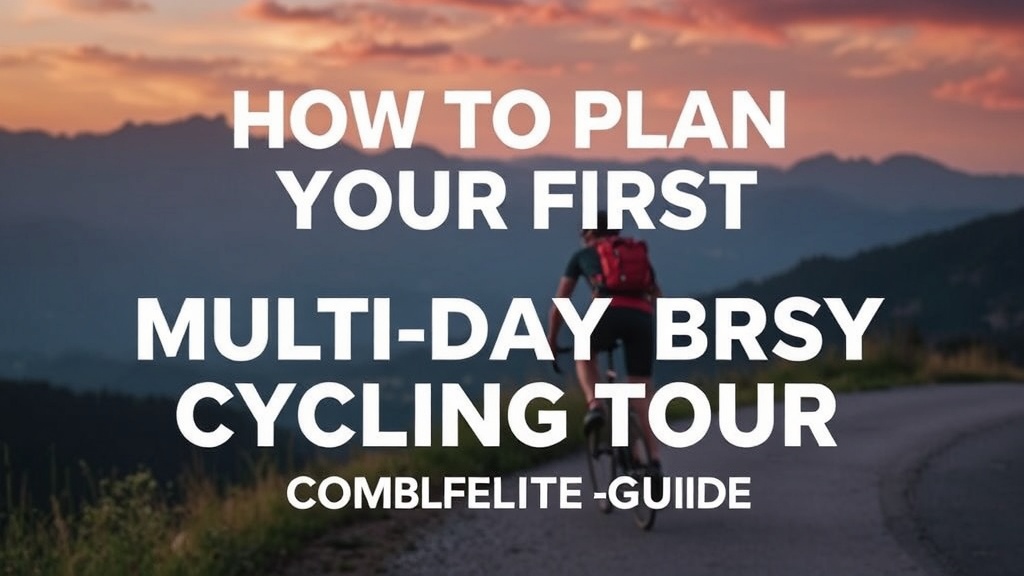
How to Plan Your First Multi-Day Cycling Tour: A Complete Guide
What Gear Do You Need for a Multi-Day Cycling Tour?
The right gear makes or breaks a multi-day cycling tour. You'll need a reliable touring bike, panniers for storage, basic repair tools, weather-appropriate clothing, and a comfortable saddle. That's the short answer — but the details matter more than you might think.
Start with the bike. For loaded touring (carrying your own gear), a dedicated touring bike like the Trek 520 or Surly Long Haul Trucker handles weight better than a standard road bike. These steel-frame workhorses absorb road vibrations and offer stable handling when panniers are fully loaded. That said, credit-card touring — where you stay in hotels and eat at restaurants — lets you get away with a lighter road bike like the Specialized Allez.
Panniers are your移动衣柜 and kitchen. Ortlieb Back-Roller Classic panniers dominate the market for good reason — they're waterproof (truly waterproof, not water-resistant), durable, and attach securely with the QL2.1 system. Most tourers run two rear panniers for a total of 40 liters, which handles a week's worth of lightweight gear. Running four panniers (front and rear) gives you 80+ liters — overkill for most beginners.
The catch? Weight adds up fast. Here's a realistic packing list:
- Clothing: Two cycling jerseys, one pair cycling shorts, one pair casual shorts, two t-shirts, lightweight jacket, rain shell, arm warmers (versatile!), three pairs socks, cycling shoes, sandals
- Repair kit: Spare tube, patch kit, tire levers, multi-tool with chain breaker, quick links, pump, spare brake pads
- Electronics: Phone, USB charger, battery pack, headlight, tail light
- Personal: Toothbrush, minimal toiletries, sunscreen, basic first aid
That's it. Leave the camp stove at home for your first tour. You'll figure out what you actually need after a few days in the saddle — and most people overpack by 30%.
How Do You Plan the Route for Your First Cycling Tour?
Start small. A three-day weekend tour covering 150-200 total miles teaches you more about touring than ambitious plans you'll abandon by day two. Pick a route with services every 30-40 miles — gas stations, cafes, towns — so you're never far from water, food, or help.
Route planning tools have improved dramatically. Komoot specializes in cycling routes and surfaces — gravel vs. paved, bike-friendly paths vs. busy highways. The algorithm favors quiet roads, which matters when you're loaded down and moving slower than traffic expects. Worth noting: Google Maps cycling directions work in a pinch but sometimes route you onto busy roads with minimal shoulders.
Consider the terrain carefully. Flat routes aren't always easier. Headwinds on flat Kansas roads can feel harder than climbing Colorado passes. (There's a reason experienced tourers check wind forecasts obsessively.) For beginners, rail trails and canal paths offer car-free riding with gentle grades. The Great Allegheny Passage from Pittsburgh to Cumberland — 150 miles of crushed limestone, no cars, gradual climbs — serves as an ideal first tour. The Katy Trail across Missouri offers similar beginner-friendly conditions.
Here's the thing about daily distances: cut your expectations in half. A cyclist who breezes through 60 miles on a Saturday club ride might struggle with 40 miles fully loaded into a headwind. Plan 40-50 mile days for flat terrain, 30-40 for hilly routes. Build in a rest day every third or fourth day — not optional, necessary. Your body adapts, but it needs time.
Book accommodations in advance for your first tour. The spontaneity of wild camping sounds romantic until you're exhausted at 7 PM with nowhere legal to sleep. WarmShowers.org connects cyclists with hosts offering free places to stay — a community built by cyclists, for cyclists. For hotels, the Booking.com app lets you filter for places that accept late arrivals.
What Should You Eat and Drink During a Multi-Day Bike Tour?
Eat constantly and drink before you're thirsty. Cycling burns 400-600 calories per hour, and multi-day touring means you can't just refuel at the end — you need steady intake throughout the day. Aim for 60-90 grams of carbohydrates per hour while riding.
Real food beats processed bars over the long haul. Peanut butter sandwiches, bananas, rice cakes, boiled potatoes with salt — these provide sustained energy without the sugar crash. That said, Clif Bars and Science in Sport (SiS) gels work when you're too tired to chew. Carry a mix.
Hydration follows the "little and often" rule. Two water bottles on the bike, refilled at every opportunity. In hot weather, aim for one bottle per hour. Electrolytes matter more than most beginners realize — plain water without salt replacement dilutes your blood sodium and causes problems. NUUN tablets or Skratch Labs hydration mix added to your bottles prevent this.
Dinner deserves attention. After burning 4,000+ calories, a small salad won't cut it. Pizza, pasta, burrito bowls — dense carbohydrates with protein. Many cyclists find they crave salt intensely after several days of sweating. Listen to that craving. The restaurant doesn't mind if you ask for extra salt.
Breakfast sets up your whole day. Oatmeal with peanut butter and banana provides slow-burning fuel. Eggs and toast work. Skip the pastry-only breakfast — the sugar spike leads to a bonk by mile 20.
How Much Should You Budget for a Multi-Day Cycling Trip?
Multi-day cycling tours range from $30 per day (camping and cooking) to $300+ (hotels and restaurants). Most beginner tourers land in the $75-150 daily range with a mix of budget motels and campgrounds.
The biggest variables are accommodation and food. Here's a realistic breakdown for a 5-day tour:
| Expense Category | Budget Option | Mid-Range | Comfort |
|---|---|---|---|
| Accommodation (4 nights) | $60 (camping) | $320 (motels) | $600 (hotels) |
| Food (5 days) | $100 (groceries/cooking) | $200 (mix) | $400 (restaurants) |
| Bike prep/gear | $50 | $100 | $200 |
| Incidentals | $40 | $80 | $150 |
| Total (5 days) | $250 | $700 | $1,350 |
Hidden costs catch beginners off-guard. Cash for small-town general stores that don't take cards. Unexpected hotel when weather turns nasty. Replacement tube when you get your third flat. Budget 20% extra for "stuff happens."
Money-saving strategies exist. Wild camping on public lands (where legal) eliminates accommodation costs. Grocery store sandwiches beat restaurant prices by 60%. WarmShowers hosts often offer dinner and breakfast along with the bed. The Adventure Cycling Association offers route maps with services marked — worth the membership fee for the planning resources alone. Check their route network for established tours with known service stops.
How Do You Train for Your First Multi-Day Tour?
Build up to back-to-back long rides. One long Saturday ride doesn't prepare your legs for three hard days in a row. Two weeks before your tour, complete a Saturday-Sunday combo — 40 miles Saturday, 30 Sunday — to understand how your body recovers.
Train with weight before you leave. Load your panniers with books or water bottles and do your long rides fully loaded. Your bike handles differently — slower steering, more momentum in descents, harder braking. Better to discover this on a training ride than a mountain descent.
Saddle time matters more than speed. You need six-hour ride tolerance, not 20-mph average speed. The groin adapts to pressure over time — there's no shortcut. A Brooks B17 leather saddle molds to your shape over 500+ miles, becoming supremely comfortable. Synthetic saddles work immediately but never improve. Worth noting: many tourers swear by padded cycling shorts — not for the padding alone, but for the moisture-wicking and reduced friction.
What Problems Should First-Time Tourers Expect?
Mechanical issues happen. Tires pick up debris. Chains stretch. Cables fray. The difference between an inconvenience and a tour-ender is knowing basic repairs. Practice fixing a flat before you leave — not reading about it, actually doing it, in the dark, with cold fingers. That's what roadside repairs feel like.
Rain doesn't mean quitting. Quality rain gear (Showers Pass jackets, Endura shoe covers) keeps you functional if not exactly happy. Wet descents require caution — rim brakes lose effectiveness when soaked, another reason disc brakes dominate modern touring bikes.
"The best tour is the one you finish. The second-best is the one where you learned something for next time."
Isolation hits harder than expected. Solo touring offers freedom but also long hours with your own thoughts. Some riders love this. Others discover they need the social energy of group riding. Neither is wrong — but know your preference before committing to a week alone.
Soreness accumulates. A slight knee niggle on day one becomes excruciating by day four. Address pains immediately — adjust saddle height, change cleat position, take breaks. Cycling shouldn't hurt (beyond normal exertion). Bicycling magazine offers solid guides on bike fit adjustments that prevent overuse injuries.
The mental game surprises most beginners. Day three often brings low motivation — sore, tired, missing home comforts. This passes. Day four typically brings renewed energy as your body adapts. Push through the dip.
Ready to Roll
Multi-day cycling tours transform riding from exercise into travel. The bike becomes transportation, not just recreation. You'll cover distances impossible on foot, see landscapes invisible from car windows, and finish each day with the satisfaction of genuine accomplishment.
Start with a three-day weekend. Pick a forgiving route — the Florida Keys Overseas Heritage Trail, the Greenbrier River Trail in West Virginia, or any rail trail with services. Pack less than you think you need. Eat more than you think you should. Stop for photos. Talk to locals. The road teaches what no article can.
Your first tour won't be perfect. That's the point. You'll forget something important, bonk at mile 45, and wonder why you thought this was a good idea. Then you'll finish, start planning the next one, and understand why cyclists become addicted to life on two wheels.
Steps
- 1
Choose Your Route and Distance
- 2
Gather Essential Gear and Equipment
- 3
Book Accommodations and Plan Your Itinerary