8 Smart Alternatives to Hotels for Your Next Long-Distance Cycling Trip

Planning where to sleep each night shouldn't be the most stressful part of your cycling vacation. This guide covers eight overlooked accommodation options that experienced cyclists use when hotels are scarce, overpriced, or simply nonexistent along their route. You'll learn which alternatives work best for different regions, how to book them (or not book them), and what to expect when you trade room service for something a bit more adventurous.
What Do You Do When the Next Hotel Is 50 Miles Away?
Sometimes your legs give out before you reach that booked hotel. Other times, there simply isn't a hotel within reasonable distance of your planned stop. This is where wild camping enters the picture — though the rules vary dramatically depending on which country you're pedaling through.
In Scotland, the Outdoor Access Code explicitly permits responsible wild camping on most unenclosed land. You can pitch your tent beside a loch, cook dinner as the sun dips behind the hills, and wake up to mist rolling off the water — all without spending a penny. Scandinavia operates under similar principles, with Norway's allemannsretten (everyman's right) allowing you to camp anywhere uncultivated for up to two nights.
But wild camping isn't just about saving money. It's about flexibility. When you're not chained to hotel check-in times, you can linger at that perfect viewpoint or push harder on days when the tailwind is generous. Just remember the unwritten rules: camp high, camp late, leave no trace, and never light fires where they're prohibited. Carry a trowel for proper waste disposal — your cycling reputation depends on the cyclists who follow you.
Is It Safe to Sleep in Churches and Monasteries Along Cycling Routes?
Across Europe, religious institutions have accommodated pilgrims and travelers for centuries — and many still welcome cyclists today. The network of pilgrim hostels (albergues) along Spain's Camino de Santiago isn't reserved solely for those walking the religious route. Cyclists with pilgrim passports can access these simple dormitory-style accommodations for donations as small as ten euros.
In France, the Refuges system offers something similar — modest rooms in monasteries, abbeys, and convents that charge minimal fees or operate on donation basis. You'll typically get a bed, hot shower, and sometimes a simple dinner prepared by the resident community. Don't expect WiFi or television. Do expect silence after 9 PM and breakfast prayers that start before dawn.
The etiquette is straightforward: present yourself respectfully, cover your shoulders and knees when arriving, and never treat these spaces as cheap hotels. They're functioning religious sites that happen to extend hospitality. A handwritten thank-you note left with your donation goes further than you'd expect — these institutions often remember courteous guests and welcome them back years later.
Why Are More Cyclists Choosing Farm Stays Over Hotels?
Agritourism — staying on working farms — has exploded across rural Europe and parts of North America. For cyclists, these accommodations hit a sweet spot: they're located outside expensive town centers (meaning you ride straight to the door without navigating traffic), they include enormous breakfasts using ingredients grown meters from your bedroom, and they cost significantly less than equivalent hotels.
Italian agriturismos set the standard. After grinding up Tuscan hills all afternoon, arriving at a farmhouse where Nonna hands you a glass of house wine and points toward the pool isn't just accommodation — it's recovery. Many farms specifically cater to cyclists, offering secure bike storage, repair stands, and packed lunches for the next day's ride.
The booking platform Warmshowers deserves special mention here. This volunteer network connects touring cyclists with hosts (often fellow cyclists) who offer free accommodation — usually a spare room, sometimes a garden for camping, occasionally a hot shower and laundry without the overnight stay. It operates on reciprocity: you don't pay, but you're expected to host when cyclists pass through your hometown. The conversations shared over home-cooked meals often become the stories you tell years later.
How Does House-Swapping Work for Cycling Vacations?
If you own a home — even a modest apartment — you have currency in the house-swapping economy. Platforms like HomeExchange and Love Home Swap facilitate trades where you occupy someone's residence while they occupy yours. For cyclists, this opens possibilities that hotels simply can't match: garage storage for bikes, full kitchens for carb-loading, and neighborhoods that feel lived-in rather than touristy.
The key is finding swap partners who understand cycling priorities. You'll want to emphasize secure indoor storage, proximity to cycling routes, and whether you're comfortable with them using your own bikes (some swappers love this — it means they don't need to rent). Many exchanges involve cars too, which solves the problem of reaching remote trailheads.
Successful swaps require flexibility. You might not align schedules with someone in the Italian Dolomites during peak cycling season. But you might find someone in lesser-known cycling regions — Slovenia's Soca Valley, for instance, or the Carpathian Mountains of Romania — who's eager to swap for your city apartment during the same weeks you have vacation time. These less-obvious destinations often deliver better riding anyway.
Can You Really Sleep in Fire Stations and Police Stations?
In parts of rural Turkey, Iran, and Central Asia, cyclists have long relied on an unofficial hospitality tradition: asking at police stations or fire departments for a place to sleep. These public servants often have spare rooms, courtyards, or simply a safe patch of floor where travelers can unroll sleeping bags. It's not luxury — you'll likely sleep on a mat in a common area — but it's secure, dry, and sometimes includes an invitation to share the station's evening meal.
This practice requires cultural sensitivity. In these regions, hospitality is considered a duty, not a business transaction. Refusing offered tea or food can cause genuine offense. Conversely, attempting to pay for kindness (beyond perhaps a small gift from your home country) transforms hospitality into commerce and ruins the exchange.
Language barriers are real but surmountable. Carry a translation card explaining you're cycling long-distance and need a safe place to sleep. Smartphone translation apps work offline now — download the relevant language packs before your trip. Most importantly, trust your instincts. If a station feels unwelcoming or the officers seem uncomfortable, thank them and continue to your backup option.
What About Those Strange Pod Hotels Popping Up in Rural Areas?
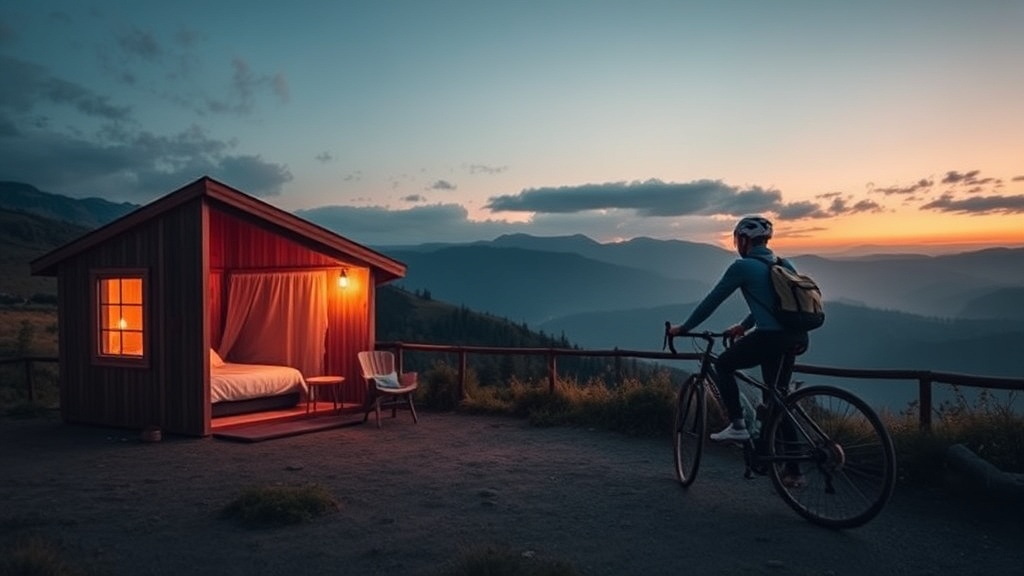
Japan's capsule hotels have inspired a rural cousin: the cycling pod. These self-contained sleeping units — sometimes repurposed shipping containers, sometimes purpose-built micro-cabins — are appearing along popular cycling routes from Portugal's Alentejo region to New Zealand's South Island. They offer hotel-quality mattresses and climate control with campground pricing.
Most operate through app-based booking systems. You reserve your pod, receive a digital entry code, and never interact with staff. Inside, you'll find a surprisingly comfortable bed, charging ports, and sometimes a small television. Showers and kitchen facilities are usually communal and located in separate buildings nearby.
The appeal is automation and location. These pods sit where traditional hotels wouldn't be economically viable — along remote coastal routes, in mountain passes, at the edge of national parks. You get a secure, weatherproof sleep without carrying camping gear. The trade-off is Spartan surroundings and zero room service. Bring your own snacks — vending machine options get old after day three.
Why Sleeping in Train Stations Isn't Just for Backpackers
Experienced touring cyclists know the train station trick: when you're caught between destinations without camping gear, major rail stations often provide shelter that's legal, well-lit, and monitored by security. Japan's major stations are famous for this — cyclists regularly spend hours dozing in designated rest areas while waiting for dawn or a connecting train.
This isn't about comfort. It's about survival when plans collapse. Maybe your accommodation canceled last minute. Maybe a mechanical issue stranded you miles short of your destination with darkness falling. Knowing that the station in the next town has heated waiting rooms and 24-hour vending machines provides psychological safety that's worth more than the zero dollars it costs.
Some European stations take this further. In Switzerland, several mountain stations offer "hiker's sleep" options — basic bunks in station buildings for walkers and cyclists who need to catch early trains. Austria's alpine huts connected to railway stops operate similarly. You're not staying in the station proper, but in affiliated basic accommodation that exists precisely because the station exists.
How Do You Ask Locals for a Place to Stay?
There's an art to the spontaneous request — and it separates confident touring cyclists from those who panic at sunset. The technique varies by culture, but universal principles apply. Approach houses with lights on (occupied) but not grand gates (wealthy homeowners are less likely to say yes). Look for telltale signs of cyclists: bike racks, touring stickers on cars, athletic wear drying on lines.
Your opening matters. Don't begin with "Can I sleep here?" — that's presumptuous. Start with context: "I'm cycling to [destination] and the next hotel is too far for tonight. Do you know anywhere nearby where cyclists can camp?" This gives the person an easy out (they simply say no) while also inviting them to offer their yard if they're so inclined.
In rural Portugal, this approach routinely results in invitations to dinner. In parts of the American Midwest, you might get directions to a church basement or city park where camping is permitted. In the Balkans, expect homemade rakija and stories about the region's history. The unifying thread is human connection — something you rarely get checking into a chain hotel with your booking confirmation number.
Your cycling vacation becomes memorable not through the kilometers logged but through the unexpected hospitality encountered. These eight alternatives aren't second choices to hotels — they're first choices for cyclists who value flexibility, authenticity, and the occasional story worth retelling at dinner parties for decades.