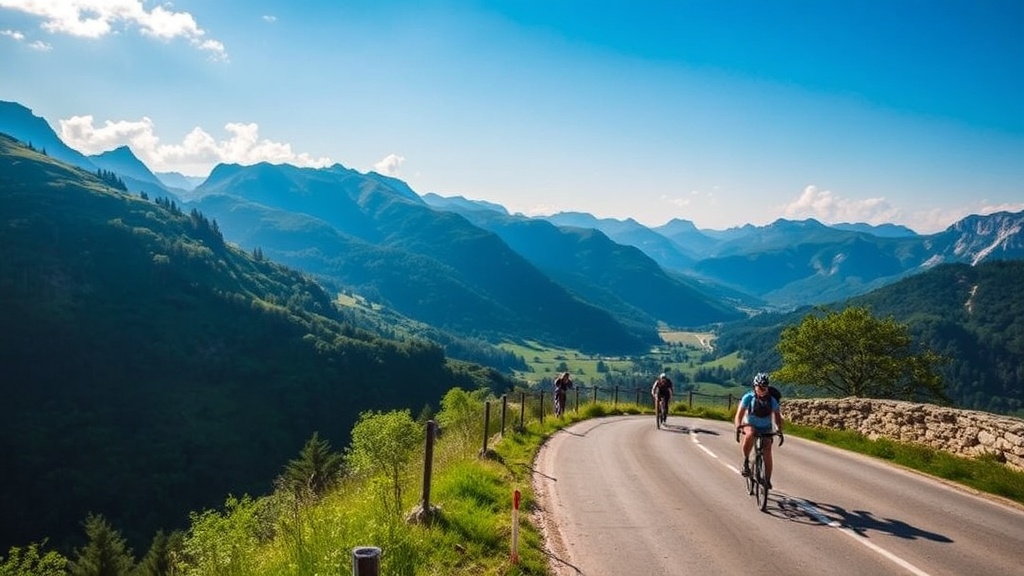
5 Breathtaking European Cycling Routes for Your Next Adventure
The Algarve Coastal Route, Portugal
The Danube Cycle Path, Austria to Hungary
The Loire Valley Châteaux Trail, France
The Amalfi Coast Circuit, Italy
The Scottish Highlands Mountain Passes
Europe's cycling infrastructure rivals anywhere on earth—thousands of miles of dedicated paths connecting medieval villages, alpine meadows, and Mediterranean coastlines. This guide breaks down five routes that deliver unforgettable scenery, manageable terrain, and authentic cultural immersion. Whether you're planning a weekend escape or a multi-week expedition, these trails offer something for every skill level.
What Is the Most Scenic Cycling Route in France?
The Loire Valley—known as "the Garden of France"—holds that crown. This 500-mile route (La Loire à Vélo) follows the river from the mountains of the Massif Central to the Atlantic coast at Saint-Nazaire.
The appeal here isn't punishing climbs or technical descents. It's châteaux. Over 300 of them dot the landscape—Chambord, Chenonceau, Villandry—each visible from the saddle without detour. The path itself is mostly flat, paved, and car-free for roughly 70% of its length.
Most cyclists tackle the central stretch between Orléans and Angers (about 200 miles). That distance breaks nicely into week-long itineraries with nightly stops in towns like Amboise (where Leonardo da Vinci spent his final years) or Saumur (famous for its sparkling wines and equestrian school).
Bike rental outfits along the route—Detours de Loire in Blois or Loire Evasion in Tours—offer luggage transfer services. You pedal unburdened; your bags meet you at the hotel. Worth noting: July and August bring crowds and higher prices. Late May or early September deliver ideal weather without the tour bus crush.
Which European Country Has the Best Cycling Infrastructure?
The Netherlands built the gold standard—over 22,000 miles of dedicated bike paths, traffic lights for cyclists, and roundabouts designed around two wheels, not four.
For visitors, the LF routes (Landelijke Fietsroutes) form a numbered network spanning the entire country. The LF1 North Sea Route runs 380 miles from the German border to the Belgian coast, threading through dunes, polders, and harbor towns. You'll share paths with commuting grandmothers, schoolchildren, and business executives in suits—cycling here isn't recreation; it's simply how people move.
The terrain is pancake-flat (literally—the country's highest point tops out under 1,100 feet). That accessibility comes with trade-offs. Monotony can set in over long distances. Here's the thing though: the Dutch compensate with extraordinary attention to rider comfort.
Rest stops appear every few miles—cafes with bike parking, repair stations with pumps and tools, and clear signage that eliminates navigation anxiety. The Holland Cycling Routes website offers detailed GPS tracks and accommodation booking.
Amsterdam makes a tempting starting point, but the true magic lies outside the capital. Haarlem's cobbled center, the tulip fields around Lisse (late April timing required), and the Delta Works in Zeeland—massive engineering marvels holding back the North Sea—reward riders willing to venture beyond the obvious.
Is Cycling the Alps Only for Serious Athletes?
Absolutely not—provided you choose the right passes and timing.
The Dolomites in northeastern Italy offer dramatic limestone peaks without the elevation extremes of France's high Alps. The Sella Ronda—a 34-mile loop around the Sella massif—climbs four passes but never exceeds 7,500 feet. Mountain refuges serve hearty pasta and cold beer at each summit. The route functions as a circuit, so you return to your starting hotel—no shuttle logistics required.
Austria's Lake Constance Cycle Path presents an even gentler alpine-adjacent option. This 170-mile loop connects three countries (Austria, Germany, Switzerland) around a freshwater lake with views of the snow-capped Alps across the water. E-bike rentals dominate here for good reason—local shops like Radverleih Bodensee stock high-quality Trek and Cube models with 500Wh batteries that flatten the modest hills.
The catch? Weather windows matter. High passes typically open late June and close by late September. Early season snowmelt creates spectacular waterfalls but also chilly descents requiring wind jackets and full-finger gloves. That said, July afternoons often bring predictable thunderstorms—plan morning climbs and leisurely afternoon lunches.
What's the Best Coastal Cycling Route in Europe?
Portugal's Algarve coast delivers 100 miles of cliff-top drama between Sagres and the Spanish border. The N268 and supporting coastal roads—recently upgraded with dedicated bike lanes—treat riders to sea stacks, hidden coves, and fishing villages unchanged for generations.
The riding isn't flat. The route rolls through the Serra de Monchique's foothills, with several 500-foot climbs that reward effort with sweeping Atlantic views. Sagres itself—Europe's southwesternmost point—feels like the edge of the world. Henry the Navigator once trained explorers here; now surfers and cyclists claim the territory.
Accommodation ranges from boutique pousadas (historic buildings converted to luxury hotels) to family-run guesthouses in towns like Lagos and Tavira. Seafood dominates menus—grilled sardines, cataplana (clam stew), and percebes (goose barnacles) harvested from wave-battered rocks.
5 European Cycling Routes at a Glance
| Route | Country | Distance | Difficulty | Best Season | Highlight |
|---|---|---|---|---|---|
| La Loire à Vélo | France | 500 miles (full) / 200 miles (recommended) | Easy | May-June, Sept | Château de Chambord |
| LF1 North Sea Route | Netherlands | 380 miles | Easy | April-October | Delta Works engineering |
| Sella Ronda | Italy | 34 miles | Moderate | June-September | Four mountain passes |
| Lake Constance Cycle Path | Austria/Germany/Switzerland | 170 miles | Easy-Moderate | May-October | Three-country loop |
| Algarve Coastal Route | Portugal | 100 miles | Moderate | March-June, Sept-Nov | Sagres cliffs |
How Should You Prepare for a European Cycling Trip?
Logistics separate dream trips from disasters.
First—bike transport versus rental. Flying with your own rig (using a hard case like the Thule RoundTrip Transition or soft EVOC Bike Travel Bag) costs $100-200 each way on major carriers. European rental fleets have improved dramatically; most tourist regions now stock carbon road bikes and quality e-bikes. For multi-day tours, rental makes sense. For week-long basecamp-style riding, bringing your familiar machine pays off.
Insurance deserves attention. Standard travel policies often exclude "adventure activities." Verify coverage specifically includes cycling, or purchase dedicated bike travel insurance from providers like World Nomads or Yellow Jersey. Medical evacuation from alpine regions runs thousands—don't skip this.
Gear essentials vary by route:
- Navigation: Komoot or RideWithGPS apps work offline with downloaded maps. Don't rely solely on phone batteries—bring a small battery pack.
- Clothing: Weather changes fast in mountains. Packable wind/rain jackets (Pearl Izumi, Rapha, or local European brands like Assos) weigh little and save rides.
- Tools: Multi-tool, spare tube, tire levers, mini-pump. Even on supported tours, self-sufficiency prevents long walks.
- Lights: Required by law in many countries after dark. Small USB-rechargeable units suffice.
Booking accommodation requires strategy during peak season. The Loire and Algarve fill months ahead for July. Elsewhere—particularly in the Netherlands and Austria—flexibility remains possible. Apps like Booking.com filter for "bike-friendly" properties, but calling directly often secures secure storage and local route advice.
Budget expectations: self-supported tours run $75-125 daily (mix of guesthouses and casual dining). Supported tours with luggage transfer and included meals range $200-350. The Dolomites command premium pricing—mountain huts during July peak approach $100 nightly for dormitory beds with half-board.
One final consideration—e-bikes have democratized European cycling. Previously intimidating routes (the full Loire, alpine passes, coastal headwinds) now sit within reach of casual riders. Shops from Brittany to Bavaria stock quality pedal-assist bikes with 60+ mile ranges. The stigma has vanished; you'll see fit twenty-somethings and retirees alike enjoying the boost.
Europe's cycling network keeps expanding. New connections—like the EuroVelo routes stitching together national paths into transcontinental trails—promise decades of exploration. Pick a route matching your fitness and curiosity. The continent unfolds differently from two wheels.